Mindfulness practices often rely on simple, repetitive actions that encourage attention and presence. In traditional Zen monasteries, daily labor such as sweeping, gardening, or raking gravel is considered a form of meditation rather than a chore.
Mitate explores how those practices could translate into a digital experience. The project imagines a mobile application that encourages brief moments of mindfulness through small acts of care within a virtual Zen garden.
Background
Zen gardens reflect a philosophy in which careful maintenance becomes part of the meditation practice itself. The slow, repetitive actions involved in tending the garden encourage reflection and attention to detail.
Many people today live in environments where these practices are difficult to access. Urban living spaces, busy schedules, and limited access to outdoor environments make it difficult to engage in this kind of mindful physical labor.
This project explored how the principles behind Zen garden practice might be translated into a digital interaction without losing the sense of calm and reflection associated with the tradition.
Challenge
The primary design goal was to create an experience that encourages short moments of mindfulness rather than long sessions of engagement.
Many mobile applications are designed to capture as much attention as possible. In contrast, the goal of Mitate was to create a product that encourages users to briefly pause, complete a small action, and then return to their day.
This meant prioritizing calm interactions, subtle visual feedback, and gentle environmental cues rather than explicit instructions or gamified challenges.
Process
The core interaction of the application centers on maintaining a small digital Zen garden. Leaves periodically fall into the garden, and users remove them through simple sweeping gestures. The interaction is intentionally repetitive, reflecting the kind of daily labor that forms the basis of traditional Zen practice.
Users can also personalize their garden by arranging rocks, fences, and other elements that shape the composition of the space. This reflects the importance of balance and spatial composition within traditional Zen garden design.
Subtle motion within the environment encourages slower breathing and relaxation. Trees sway gently, creating a natural rhythm that users can follow without requiring explicit prompts or guided meditation instructions.
The experience is designed to be revisited briefly throughout the day rather than used continuously.
Final Product
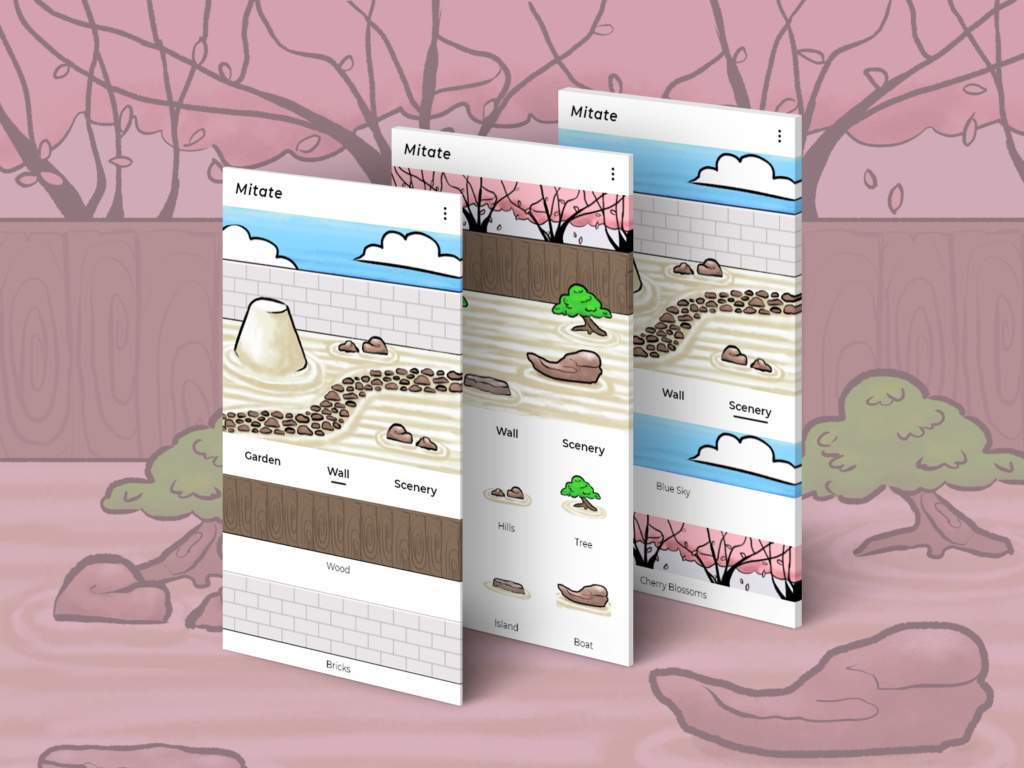
Mitate presents users with a small digital garden that evolves through care and customization.
Rather than rewarding prolonged interaction, the application encourages brief moments of attention. Users can return to their garden, complete a small act of maintenance, and then continue with their day.
The visual design draws inspiration from traditional East Asian ink painting and calligraphy, using textured surfaces and brush-like strokes to connect the digital environment with the artistic traditions associated with Zen culture.
Impact & Insights
This project explored how philosophical ideas can shape interaction design.
Rather than building a traditional game, the experience focuses on translating principles of Zen practice into product behavior. Repetition becomes a form of mindfulness, care becomes the central interaction, and environmental cues guide the user’s breathing and attention.
The project reinforced the idea that digital products do not always need to compete for attention. Sometimes their value lies in creating small moments of quiet reflection within everyday routines.